Current location: Boston, MA.
Occupation: Student (yes, again), pursuing a doctorate in Global Health and consulting on the side
Goal: To strengthen cultural competence in global health programming and policy for children, adolescent, and youth issues, particularly in sub-Saharan Africa


Sunday, May 8, 2016

Guinea: Summer Research 2016

Beginning in March 2014, multiple West African countries began to experience the largest and deadliest Ebola outbreak recorded. Despite early warnings, international global health leaders did not unanimously declare the spread of the viral disease of Ebola hemorrhagic fever an emergency, contributing to more than 28,000 estimated infections and over 11,000 deaths. Guinea, a country with a population of 11.8 million people, was among the three West African countries most severely impacted.


Graph 1: Cumulative reported cases of Ebola virus disease in Guinea, Liberia, and Sierra Leone, March 25, 2014 – November 14, 2014, by date of WHO Situation Report, n=14383
From the Centers for Disease Control, 2016
Since the end of December 2015, Guinea and its neighbors have been declared Ebola-free. Humanitarian assistance is beginning to wane in many places, as longer-term development support rises. Yet while efforts in Guinea focus on immediate survival, health systems strengthening, and economic development - all of which are important for elevating the status of one of the poorest countries in the world - questions remain about the situation that girls and women face, and the ways in which their health and their rights have been affected.

This summer, with the generous support of the Women and Public Policy (WAPPP) Summer Internship Program, I will be conducting independent research in the Republic of Guinea as an intern with the Brigham and Women's Hospital (BWH). Under the guidance of Dr. Paul E. Farmer, Chief of the 
Division of Global Health Equity at BWH, I will focus my research on understanding problems affecting young women in Guinea following the 2014-15 Ebola crisis. Findings from my summer research will be shared with BWH affiliates and the Office of the President, with the aim of strengthening health systems activities following the Ebola epidemic. This work compliments my ongoing dissertation research, which quantitatively and qualitatively assesses how girl child marriage affects the health and development of women and their children in sub-Saharan Africa.

As a doctoral student, I have had several opportunities to conduct and strengthen research competencies, which I will use to implement this summer project. As a WAPPP Fellow, I will now have a unique opportunity to build additional skills in conducting and disseminating policy-relevant work, an important component of my minor in program leadership. Research is not an easy activity, and, at times, can be tedious, frustrating, and, frankly, just hard. Research can also be exciting, unexpected, and can lead to groundbreaking findings that have the ability to impact people around the world.  

I look forward to sharing updates on my summer abroad conducting research "in the field," and thank both WAPPP and the Committee on African Studies for their support!

Thursday, April 21, 2016

Spring Break in Panama


Have you ever traveled to a place where you had very little understanding of the cultural context? I mean, no language skills, no historical knowledge, no understanding of the local foods or even what to do there? If you look back at my past trips - whether Paris, Jamaica, Burundi, or Malawi - I rarely go in so "under-prepared." But the stressful doctoral student life and the need for a little "adventure" led this D.I.V.A. blindly to...Panama!

This year, for Spring Break, I traveled with a group of 7 fellow students for what I can say was a series of firsts for me. Aside from a brief trip to Cabo a couple of years ago, it was my first time in Central America. It was my first time prolonged trip to a Spanish-speaking country. It was even my first opportunity to put my Zumba skills to work in real life.

Day 1 - Panama City

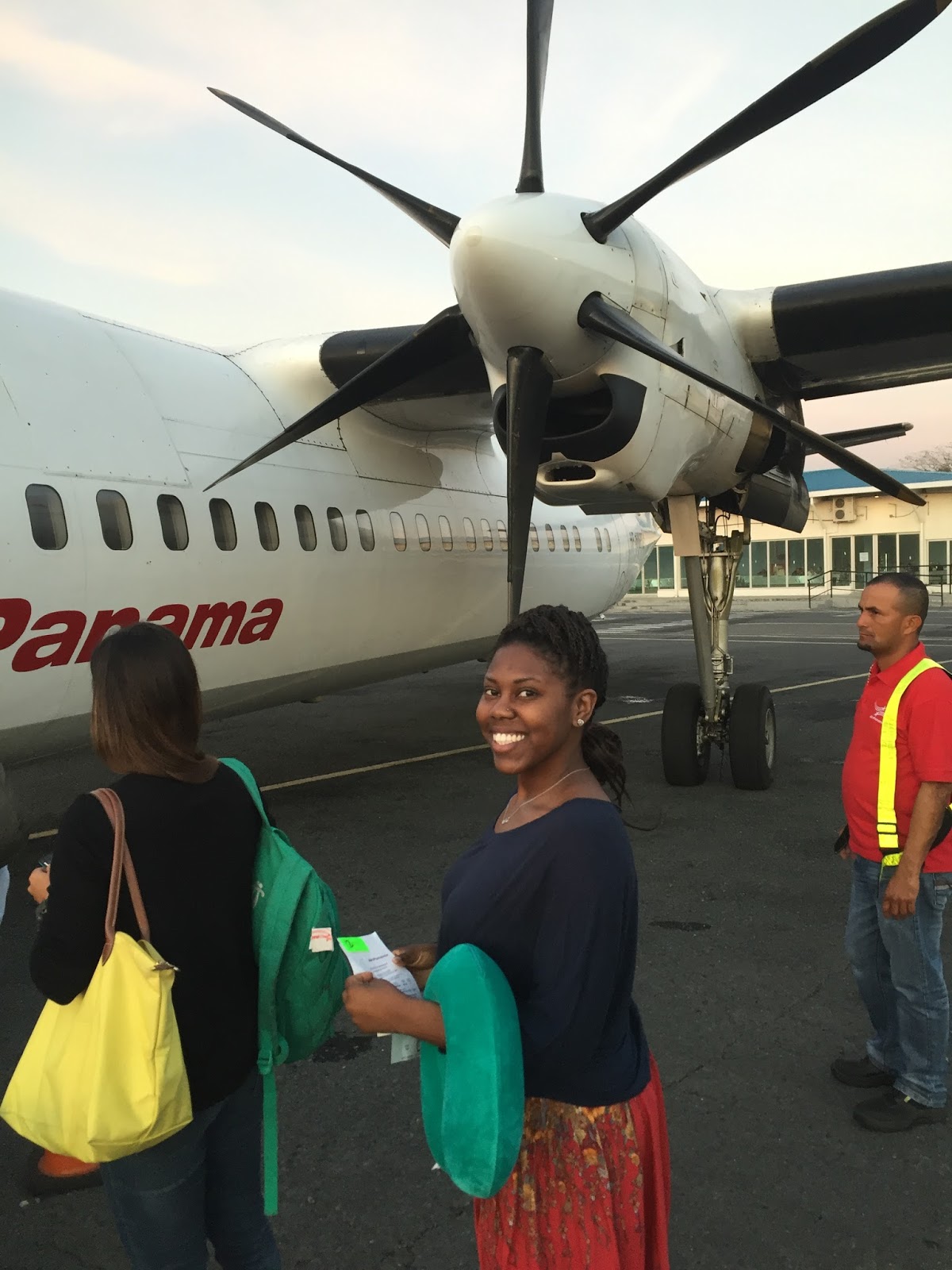
After a full-day of flying (Boston-Miami-Panama City), we made it to Panama! We spent the evening walking the streets of Casca Viejo, checking out some cultural sites and eating lots of ceviche!

The streets of Casco Viejo (Old Town)
Some ruins (next to prime real estate!)
Consecrated in 1796, Metropolitan Cathedral is the
Old Quarter's largest church. 

Panama City's skyline
As we walked around, we stumbled upon a free, open-air dance and music show, and learned (in Spanish) about the country. Panama is located in Central America, bordered by Colombia, Costa Rica, and the Caribbean. The dances and songs held a Spanish-meets indigenous- meets Caribbean flair, indicative of the country's interesting history and geography.


They danced with fire on their heads!
Days 2 and 3 - San Blas Islands

A brutal 5 AM departure, driving for three hours and taking a boat, kicked off our second day in what may have been one of the most unique parts of our trip: a two day, one night off-the-grid voyage to the San Blas Islands.

Passing through the rain forest on our drive. 


Waiting at the port to catch our boat to the island.


After a brief boat malfunction, we made a pit stop at an island inhabited by the Kuna (or Guna), an indigenous population in Panama (as well as Colombia and Costa Rica) with their own laws, customs, norms, and language. Their village, not such a departure from many African communities, stood out for the way in which they have been able to invest in development. The community housed multiple primary and secondary schools, a small university (!!), a clean health facility, and - most interestingly to me - solar panels for every building! 


A small police department in the distance.


Notice the solar panel on every home and building!
With a new (functioning) boat, we continued our trip to one of San Blas' nearly 400 islands, which we would call home for the night. 


Some people went camping the old fashioned way...
We opted for a bed!
We spent the next 24 hours boating with a small group from island to island and soaking in the sun on the gorgeous beaches! We ate meals as a group with a view of the water, and played cards in the evening until 10 pm, when the electricity on the island shut off. No internet allowed! 


Day 3 and 4 - Panama City

After a full day in the sun, we made the three-hour trip back to Panama City to meet up with the rest of the group. We did everything from group meals and a VIP night out to a trip to the famous fish market to my most memorable activity: a trip to the Panama Canal! 

The "welcome to Panama City" drink
The Fish Market
Decided to try the conch ceviche (an acquired taste and local
aphrodisiac)...Think I'll stick with the local beer.

So excited!!
(It's like my middle school history textbook came to life!)
Just in time to watch some boats go through the canal!
Amazing!
Boat #2 is going...
...really slowly going...
...nearly there...
...gone!
Day 5, 6, 7, and 8 - Bocas del Toro

As if all of those activities weren't enough, we spent the second half of the trip in the Bocas del Toro province. We rented a large house (thanks AirBnB!) away from the main town and enjoyed the seaside views. We walked (and ran) along the beach, went dancing in the main town (and spent two hours trying to find a way back home!), spent a day island-hopping on a private boat (a common tourist activity in the area), and for the second time ever, I tried my hand at surfing!

Goodbye Panama City...
...Hello Bocas!
Walking along the beach close to the house.

After one of our favorite dinners.
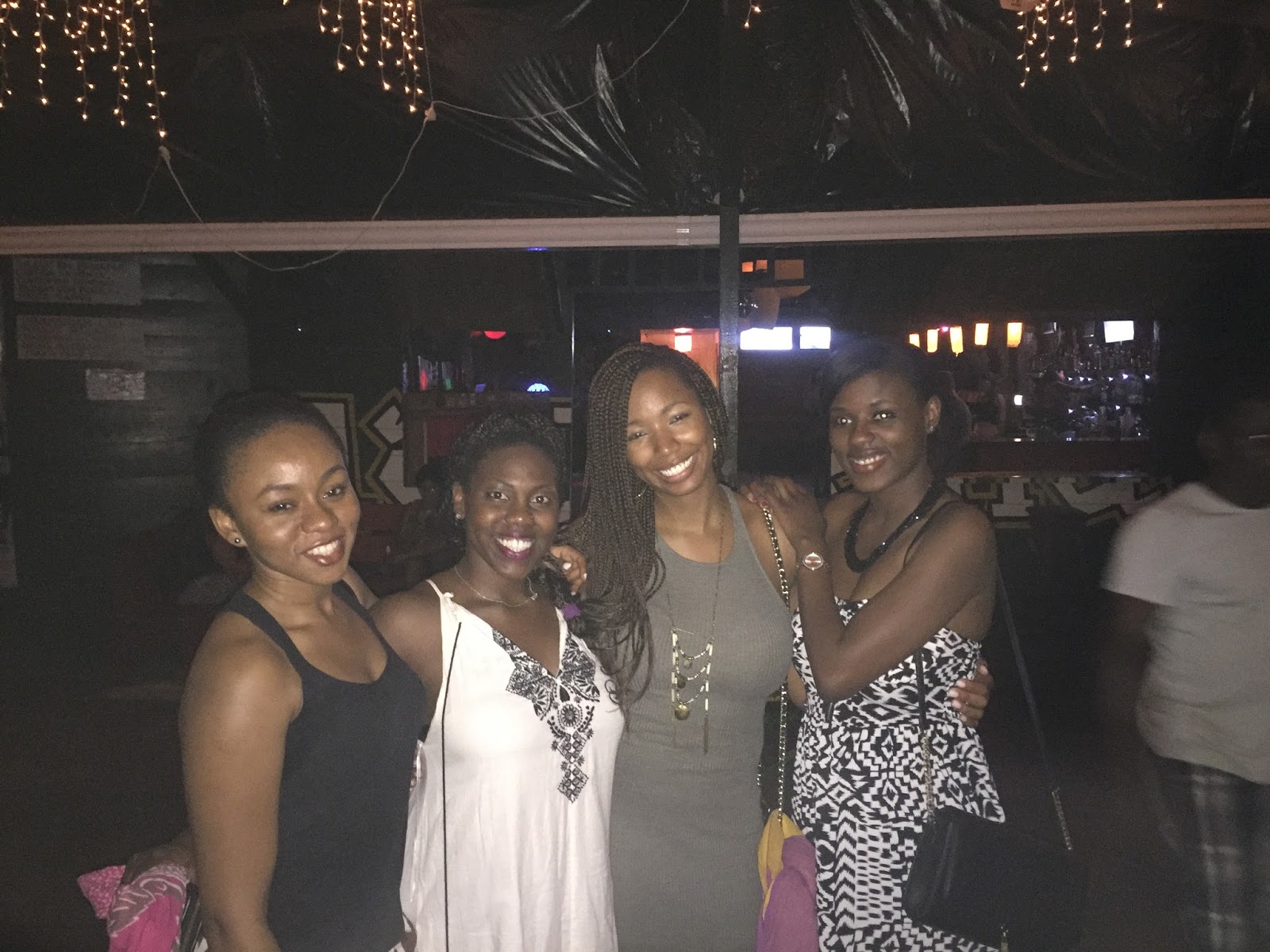
The ladies!
Leaving the port to start island-hopping!
We looked for dolphins in Dolphin Cove...
Enjoyed staring into the clear waters of Starfish Beach...


Had a yummy lunch of fresh-caught lobster...
...And went sloth-viewing, all before we made it to the beach!
After a morning of reef surfing!
After a busy day of surfing, what an incredible daytime view!
Goodbye Bocas!

The food!

And of course no blog post is complete with sharing some of my most memorable meals. As a seafood lover, Panama did not disappoint. My favorites? Ceviche, ceviche, ceviche! 
Tuna tartar at the Surfer's hangout, Bocas
Lobster with rice, coleslaw, and platanos (mashed, fried green plantains)
Seafood and plantain chips!
Roasted fish topped with a seafood smorgasbord
Perfectly cooked steak medallions with greens and platanos
The verdict?

As a beach and sunshine lover, with a special place in my tummy for seafood, the Panama trip did not disappoint! I learned a few words in Spanish, and will definitely start duolingo a couple of weeks before my next trip. But you know what I realized the secrets to a great trip are? An open (and flexible) mind and, if you so choose, a compatible travel companion. 

Looking forward to another adventure soon!